

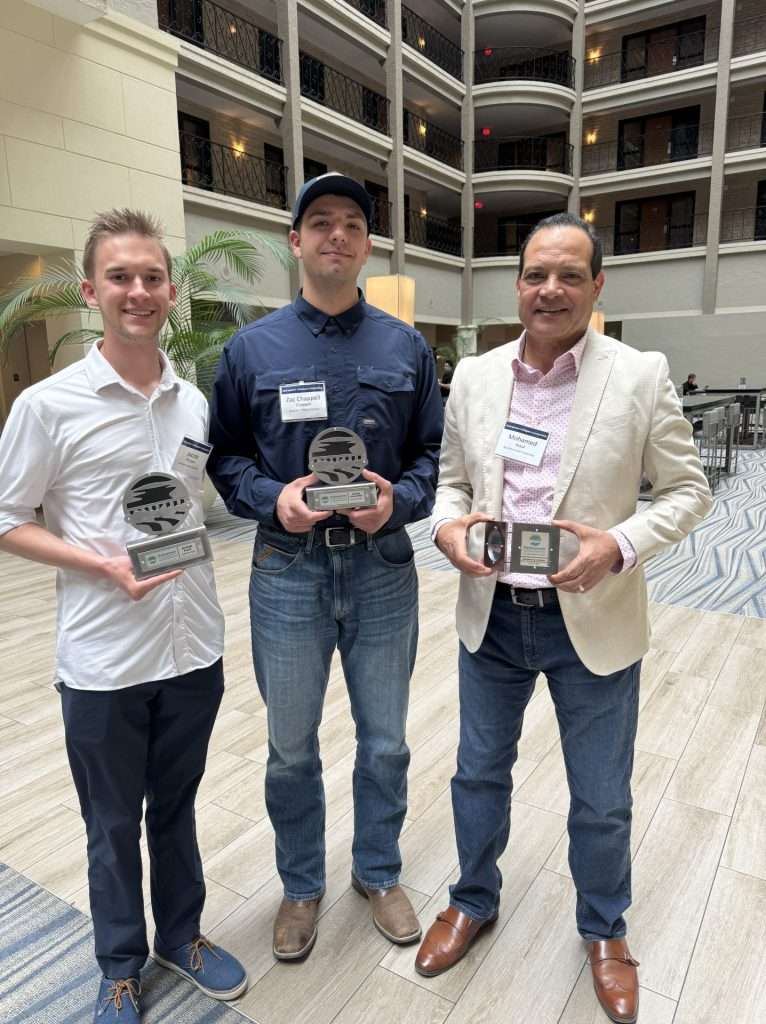
CEDAR CITY, Utah – Demonstrating outstanding technical skill and forward-thinking innovation, Southern Utah University’s (SUU) student engineering team captured second place overall at the fourth annual 2026 Hydropower Collegiate Competition (HCC). Funded by the U.S. Department of Energy’s (DOE) Hydropower and Hydrokinetic Office (H2O), the national contest challenges the country’s next generation of clean energy workers to tackle complex, real-world water power dilemmas.

In addition to their stellar second-place national finish, the T-Birds soared to the very top of the ranks by winning first place in the highly competitive Design Challenge category. The final standings placed California Polytechnic State University, San Luis Obispo in first, SUU in second, and Purdue University tied with Northern Arizona University for third. This recognition highlights SUU’s growing strength in applied engineering education, renewable energy systems, infrastructure design, and hands-on student research. 

“Securing second place overall and first place in the Design Challenge on the national stage is a tremendous milestone for SUU’s  students and overall for the College of Science, Technology, Engineering and Mathematics (CSTEM),” explained Bill Heyborne, Dean of the CSTEM at SUU. “This competition embodies exactly what we strive for at SUU: providing students with immersive, industry-aligned experiences where classroom concepts turn into real-world innovations. Our team’s success proves that our graduates are not just ready to enter the clean energy workforce, they are ready to lead it.” 

The 2026 competition focused heavily on pioneering advancements across three core areas: converting non-powered dams into energy facilities, introducing pumped storage to existing reservoirs, and advancing  in-conduit hydropower solutions. SUU’s multidisciplinary team spent the academic year researching, conceptualizing, and developing practical technologies aimed at making clean energy more accessible and affordable.

The team’s success was also strengthened by meaningful support from SUU’s community and industry partners, who helped connect the project to real regional water, energy, agricultural, and infrastructure needs. Through letters of support, stakeholder meetings, professional interviews, technical discussions, and guidance on local water-resource concerns, these partners helped students better understand the importance of protecting water rights, maintaining irrigation reliability, addressing dam safety, and communicating project benefits clearly to affected communities. SUU recognizes and appreciates the support of the Cedar City Engineering Department, The Five County Association of Governments, The Six County Association of Governments (R6 Regional Council), Utah Association of Conservation Districts, Utah Division of Water Resources in Cedar City, Central Iron County Water Conservancy District, Iron County Farm Bureau, Rural Hydro, Sunrise Engineering, Garkane Energy, and the SUU SPARC Office.

The extensive year-long process concluded at the Midwest Regional Meeting, organized by the National Hydropower Association and the Midwest Hydropower Users Group. There, SUU students delivered formal technical presentations, displayed research posters, and pitched their concepts directly to energy industry executives.

This remarkable achievement underscores SUU’s unique approach to education, combining classroom learning with professional mentorship and career-focused experiences. By positioning students on the frontlines of regional leadership and workforce development, SUU prepares its students to graduate with confidence and transition smoothly  into high-demand industries.

“Our Hydropower Collegiate Competition provides an opportunity for the next generation of American workers to take on some of the biggest issues facing the industry today,” said Nichole Fitzgerald, Hydropower and Hydrokinetic Office (H2O) Director. “The teams did a tremendous job offering innovative, affordable solutions. We look forward to seeing these students flourish in their chosen fields as they enter the workforce.”

By challenging students to turn bold ambitions into national achievements, SUU continues to demonstrate how practical investment in student potential yields immediate benefits for both the graduates and the communities they will serve.

SUU’s Walter Maxwell Gibson College of Science, Technology, Engineering, and Mathematics (CSTEM)
The Walter Maxwell Gibson College of Science, Technology, Engineering, and Mathematics (CSTEM) at Southern Utah University offers diverse programs across six academic departments: Biology, Chemistry & Physics, Computer Science & Cyber Security, Engineering, Geoscience, and Mathematics. These academic offerings are supported by over 100 dedicated faculty and staff members focused on student-centered, experiential learning. The College hosts an annual Research Symposium and maintains specialized centers like the Ashcroft Observatory, the SUU Water Lab, the Frehner Museum of Natural History, and more.

" data-pos="top" value="0" max="100">

Southern Utah University Engineered for Excellence, Secures Second Place on National Stage in U.S. Department of Energy Hydropower Competition3 min read

By Brooke Heath, Southern Utah University

CEDAR CITY, Utah – Demonstrating outstanding technical skill and forward-thinking innovation, Southern Utah University’s (SUU) student engineering team captured second place overall at the fourth annual 2026 Hydropower Collegiate Competition (HCC). Funded by the U.S. Department of Energy’s (DOE) Hydropower and Hydrokinetic Office (H2O), the national contest challenges the country’s next generation of clean energy workers to tackle complex, real-world water power dilemmas.

In addition to their stellar second-place national finish, the T-Birds soared to the very top of the ranks by winning first place in the highly competitive Design Challenge category. The final standings placed California Polytechnic State University, San Luis Obispo in first, SUU in second, and Purdue University tied with Northern Arizona University for third. This recognition highlights SUU’s growing strength in applied engineering education, renewable energy systems, infrastructure design, and hands-on student research. 

“Securing second place overall and first place in the Design Challenge on the national stage is a tremendous milestone for SUU’s  students and overall for the College of Science, Technology, Engineering and Mathematics (CSTEM),” explained Bill Heyborne, Dean of the CSTEM at SUU. “This competition embodies exactly what we strive for at SUU: providing students with immersive, industry-aligned experiences where classroom concepts turn into real-world innovations. Our team’s success proves that our graduates are not just ready to enter the clean energy workforce, they are ready to lead it.” 

The 2026 competition focused heavily on pioneering advancements across three core areas: converting non-powered dams into energy facilities, introducing pumped storage to existing reservoirs, and advancing  in-conduit hydropower solutions. SUU’s multidisciplinary team spent the academic year researching, conceptualizing, and developing practical technologies aimed at making clean energy more accessible and affordable.

The team’s success was also strengthened by meaningful support from SUU’s community and industry partners, who helped connect the project to real regional water, energy, agricultural, and infrastructure needs. Through letters of support, stakeholder meetings, professional interviews, technical discussions, and guidance on local water-resource concerns, these partners helped students better understand the importance of protecting water rights, maintaining irrigation reliability, addressing dam safety, and communicating project benefits clearly to affected communities. SUU recognizes and appreciates the support of the Cedar City Engineering Department, The Five County Association of Governments, The Six County Association of Governments (R6 Regional Council), Utah Association of Conservation Districts, Utah Division of Water Resources in Cedar City, Central Iron County Water Conservancy District, Iron County Farm Bureau, Rural Hydro, Sunrise Engineering, Garkane Energy, and the SUU SPARC Office.

The extensive year-long process concluded at the Midwest Regional Meeting, organized by the National Hydropower Association and the Midwest Hydropower Users Group. There, SUU students delivered formal technical presentations, displayed research posters, and pitched their concepts directly to energy industry executives.

This remarkable achievement underscores SUU’s unique approach to education, combining classroom learning with professional mentorship and career-focused experiences. By positioning students on the frontlines of regional leadership and workforce development, SUU prepares its students to graduate with confidence and transition smoothly  into high-demand industries.

“Our Hydropower Collegiate Competition provides an opportunity for the next generation of American workers to take on some of the biggest issues facing the industry today,” said Nichole Fitzgerald, Hydropower and Hydrokinetic Office (H2O) Director. “The teams did a tremendous job offering innovative, affordable solutions. We look forward to seeing these students flourish in their chosen fields as they enter the workforce.”

By challenging students to turn bold ambitions into national achievements, SUU continues to demonstrate how practical investment in student potential yields immediate benefits for both the graduates and the communities they will serve.

SUU’s Walter Maxwell Gibson College of Science, Technology, Engineering, and Mathematics (CSTEM)
The Walter Maxwell Gibson College of Science, Technology, Engineering, and Mathematics (CSTEM) at Southern Utah University offers diverse programs across six academic departments: Biology, Chemistry & Physics, Computer Science & Cyber Security, Engineering, Geoscience, and Mathematics. These academic offerings are supported by over 100 dedicated faculty and staff members focused on student-centered, experiential learning. The College hosts an annual Research Symposium and maintains specialized centers like the Ashcroft Observatory, the SUU Water Lab, the Frehner Museum of Natural History, and more.

Share

Leave the first comment