

From Ben Dlin, Utah Department of Natural Resources
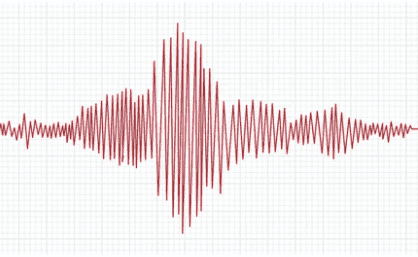
SALT LAKE CITY — At 6:32 p.m. MST on Friday, February 13, 2026, a magnitude 3.5 earthquake occurred approximately 2 miles northwest of West Valley City, Utah. The earthquake originated at a shallow depth of about 5 miles.
This was a small, common earthquake. While the shaking was felt widely across the Salt Lake Valley and caused a sharp jolt for those near the epicenter, it is important to remember that this was a small earthquake. Seismologists, such as our partners at the University of Utah Seismograph Stations, categorize events of this magnitude as “minor.” They occur regularly in Utah and typically do not cause structural damage. Because the earthquake was shallow and located beneath the densely populated West Valley City area, the ground shaking can feel alarming.
However, a magnitude 3.5 earthquake releases significantly less energy than the “major” earthquakes that emergency planners prepare for. This earthquake was approximately 150 times smaller and released 2000 times less energy than the 2020 magnitude 5.7 Manga earthquake many Utahns remember vividly (data from U.S. Geological Survey’s “How Much Bigger…?” calculator). It’s also important to remember that the 2020 Magna earthquake was not “the big one;” the Wasatch fault zone is capable of generating larger earthquakes.
It is natural to feel anxious or worried about “the big one” when the ground shakes. However, it is important to emphasize that a small quake like today’s is not a signal that a larger disaster is imminent. In the vast majority of cases, these small tremors are simply part of Utah’s normal background seismic activity. There have been no reports of injuries or significant damage. We encourage residents to use this as a gentle reminder to check their emergency kits and practice “Drop, Cover, and Hold On,” but otherwise to rest easy knowing that today’s event was a minor occurrence in our seismically active state.
For official updates on this earthquake and aftershocks please visit the University of Utah Seismograph Stations: https://quake.utah.edu/.
To report if you felt the shaking, please visit the U.S. Geological Surveys “Did you feel it?” page: https://earthquake.usgs.gov/
For information on earthquakes in Utah, please see Putting Down Roots in Earthquake Country (https://roots.geology.utah.
Finally, for information on building an earthquake kit and preparing your family for a large earthquake, please visit Be Ready Utah: https://beready.utah.gov/
Frequently Asked Questions
Below are some frequently asked earthquake questions and answers from the Utah Division of Emergency Management, Utah Geological Survey, and University of Utah Seismograph Stations. For a full list of general earthquake FAQs, visit our homepage.
What do I do during an earthquake?
-
Drop, Cover, and Hold On. Earthquakes last a matter of seconds, and rarely more than a minute or two. You do not have time to try to run out of a building. Just stay where you are and take cover under sturdy furniture like a desk, table, or chair; or get up against a wall without any glass overhead.
-
If you are in an area without furniture offering cover then kneel down against a wall that doesn’t have any glass overhead (window, mirror, picture frame, etc.).
-
If you are in bed, stay in bed and pull your pillow over your head to protect your face from glass, debris, and other objects. Don’t try to run out of a building where bricks, glass, porches, and chimneys could be falling.
-
If you are driving, try to pull over as soon as safely possible; try not to stop on a bridge or under an overpass, or underneath power lines, big trees, or tall buildings.
What do I do after an earthquake?
-
Expect aftershocks (additional earthquakes). Drop, Cover, and Hold-on for aftershocks. If you need to move to a different room to assist children, try to do so between the shaking.
-
If you can do so safely, exit the building. Go to your family meeting place, work rally point, or other appointed area. Take accountability to see if anyone is missing. Provide first aid to those who need it.
-
Inspect your home or buildings for visible signs of structural damage. If significant damage is discovered, do not re-enter the building.
-
Check on neighbors and friends, providing assistance if needed.
-
Only turn off the natural gas service valve to the building if you suspect a leak, meaning you can smell a rotten egg odor, hear a hissing sound, or visibly see a gas leak, or if your building is twisted or falling from its foundation; otherwise, leave the valve open. It is recommended that a professional (gas company tech or licensed plumber) turn your gas on, and relight your appliances. Unnecessarily turning off the gas valve causes significant extra work for utility companies and delays for customers in getting the gas turned on.
Am I safer inside or outside my house during an earthquake?
-
It is unlikely your home will collapse from a moderate to large earthquake. Running out of a building during an earthquake subjects you to falling objects and flying glass. It is much safer to Drop, Cover, and Hold on wherever you are inside the building, taking cover under a desk, table, or other sturdy furniture.
-
If you live in an unreinforced masonry home, such as those built with brick or concrete blocks before about 1975, it’s unlikely you would see a total collapse. In a worst-case scenario (7.0 magnitude or greater quake for Utah), we expect thousands of unreinforced masonry buildings to collapse, which is still a small percentage of them.
Where can I find the most reliable earthquake information?
-
Please be very wary of non-official information, such as from various social media feeds. Reliable information on earthquakes is available from the Utah Geological Survey, the University of Utah Seismograph Stations, the Utah Division of Emergency Management, and the U.S. Geological Survey. As with all information, determine if it is from a reliable source and plausible before making decisions and if the information is questionable, verify it first.
-
For general Utah earthquake information, earthquakes.utah.gov is the combined effort of all the above organizations and more to streamline all earthquake information to the public. Start there for preparedness information, latest earthquakes, earthquake geology, and frequently asked questions.
Where can I see the locations of recent earthquakes?
-
Real-time earthquake maps are available from the University of Utah Seismograph Stations and the U.S. Geological Survey. The University of Utah Seismograph Stations operates the seismograph network in Utah.
Can Utah have a magnitude 9.0 earthquake?
-
No, earthquakes greater than about magnitude 7.6 are not possible from the Wasatch fault zone or other faults in Utah. Faults in Utah are not long enough and are a different type than those off the coast of Alaska, Washington State, and the west coast of South America (Chile area), where earthquakes of magnitude 8 or greater are possible.
How can I be notified of the next earthquake?
-
Anyone can sign up for Earthquake Notification Service (ENS) and receive emails or text messages about earthquakes as the locations are published. You may set up your own geographic area and magnitude threshold. All University of Utah Seismograph Stations earthquake locations are sent out via the ENS system. Sign up here.
After an earthquake, where do I report damage to my home or business?
-
Report damage directly to your city building department or fill out the county-managed report forms set up in the days following a major earthquake. If you have earthquake insurance, contact your agent or carrier. However, earthquake damage is not covered by regular homeowner’s policies.