


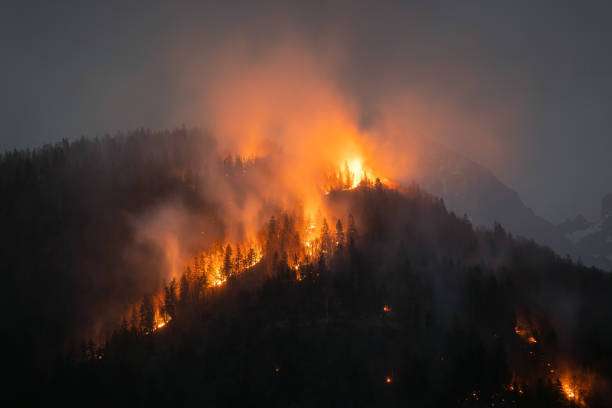
As wildfire seasons continue to grow longer and more intense across the West, residents of Southern Utah must recognize that living near open lands, cedar forests, pinyon juniper terrain, and sagebrush areas comes with increased wildfire risk. Iron County communities are especially vulnerable due to dry conditions, seasonal winds, drought cycles, and expanding residential growth into wildland areas. Preparation before a fire starts remains the single most effective way to protect lives, homes, and neighborhoods.

The area where homes and wildland vegetation meet is commonly referred to as the Wildland Urban Interface, or WUI. Communities throughout Iron County, including Cedar City, Enoch, Parowan, Brian Head, and surrounding rural areas, all face varying levels of WUI exposure. Fortunately, there are proven steps homeowners can take now to significantly reduce wildfire danger. 

One of the most important actions is creating defensible space around structures. This means reducing fuels that allow fire to move from vegetation to homes. Experts generally recommend three primary zones around a structure.

The first five feet surrounding a home should be kept as a non-combustible zone whenever possible. Remove dead grass, pine needles, wood piles, leaves, and flammable materials from this area. Decorative rock, irrigated grass, concrete, and gravel are preferred. This is also the area where ember ignitions most commonly occur during wildfires.

The next zone, extending roughly 30 feet from the structure, should include properly spaced trees and shrubs. Vegetation should be trimmed and maintained to reduce ladder fuels, which allow fire to climb from the ground into tree canopies. Tree branches should be pruned several feet above the ground, and dead vegetation should be removed regularly.

Beyond that, extending outward up to 100 feet where possible, residents should continue thinning vegetation and removing heavy fuel loads. Southern Utah’s dry cheatgrass, sagebrush, and juniper can carry fire rapidly during windy conditions. Proper spacing between vegetation can slow fire spread and improve firefighter access and effectiveness.

Home hardening is another critical component of wildfire preparation. Embers from a wildfire can travel miles ahead of the main fire front and ignite homes long before flames arrive. Residents should inspect roofs, vents, decks, siding, and gutters for vulnerabilities. Metal roofing, ember-resistant vents, screened openings, and keeping gutters clear of debris can dramatically reduce risk.

Access and evacuation planning are equally important. Driveways should be wide enough for emergency vehicles and clearly marked with visible address numbers. Families should develop evacuation plans, maintain emergency supply kits, and stay informed through Iron County emergency notification systems and local public safety agencies.

Water availability is another challenge in rural Southern Utah. Homeowners in outlying areas should know their water supply capabilities and consider additional emergency water storage when appropriate. Communities and HOAs can also work together on fuel reduction projects, greenbelt planning, and neighborhood preparedness efforts.

Wildfire preparedness is not about eliminating all vegetation or living in fear. It is about understanding the environment and taking responsible steps to reduce risk. Firefighters across the West have repeatedly seen homes survive major wildfires simply because owners invested time into defensible space and basic home protection measures.

The responsibility for wildfire safety belongs to all of us. Prepared communities are more resilient, safer for firefighters, and better positioned to recover when disasters occur.

Wildfire preparedness resources are available through Utah Fire Sense, Be Ready Utah, Utah Fire Info, and national programs like the National Fire Protection Association, Firewise USA, and FEMA. The guidance is consistent: reduce fuels, maintain defensible space, and prepare to evacuate.

" data-pos="top" value="0" max="100">

How Southern Utah Homeowners Can Reduce Wildfire Danger3 min read

By Jay Wittwer, Parowan Volunteer Firefighter

As wildfire seasons continue to grow longer and more intense across the West, residents of Southern Utah must recognize that living near open lands, cedar forests, pinyon juniper terrain, and sagebrush areas comes with increased wildfire risk. Iron County communities are especially vulnerable due to dry conditions, seasonal winds, drought cycles, and expanding residential growth into wildland areas. Preparation before a fire starts remains the single most effective way to protect lives, homes, and neighborhoods.

The area where homes and wildland vegetation meet is commonly referred to as the Wildland Urban Interface, or WUI. Communities throughout Iron County, including Cedar City, Enoch, Parowan, Brian Head, and surrounding rural areas, all face varying levels of WUI exposure. Fortunately, there are proven steps homeowners can take now to significantly reduce wildfire danger. 

One of the most important actions is creating defensible space around structures. This means reducing fuels that allow fire to move from vegetation to homes. Experts generally recommend three primary zones around a structure.

The first five feet surrounding a home should be kept as a non-combustible zone whenever possible. Remove dead grass, pine needles, wood piles, leaves, and flammable materials from this area. Decorative rock, irrigated grass, concrete, and gravel are preferred. This is also the area where ember ignitions most commonly occur during wildfires.

The next zone, extending roughly 30 feet from the structure, should include properly spaced trees and shrubs. Vegetation should be trimmed and maintained to reduce ladder fuels, which allow fire to climb from the ground into tree canopies. Tree branches should be pruned several feet above the ground, and dead vegetation should be removed regularly.

Beyond that, extending outward up to 100 feet where possible, residents should continue thinning vegetation and removing heavy fuel loads. Southern Utah’s dry cheatgrass, sagebrush, and juniper can carry fire rapidly during windy conditions. Proper spacing between vegetation can slow fire spread and improve firefighter access and effectiveness.

Home hardening is another critical component of wildfire preparation. Embers from a wildfire can travel miles ahead of the main fire front and ignite homes long before flames arrive. Residents should inspect roofs, vents, decks, siding, and gutters for vulnerabilities. Metal roofing, ember-resistant vents, screened openings, and keeping gutters clear of debris can dramatically reduce risk.

Access and evacuation planning are equally important. Driveways should be wide enough for emergency vehicles and clearly marked with visible address numbers. Families should develop evacuation plans, maintain emergency supply kits, and stay informed through Iron County emergency notification systems and local public safety agencies.

Water availability is another challenge in rural Southern Utah. Homeowners in outlying areas should know their water supply capabilities and consider additional emergency water storage when appropriate. Communities and HOAs can also work together on fuel reduction projects, greenbelt planning, and neighborhood preparedness efforts.

Wildfire preparedness is not about eliminating all vegetation or living in fear. It is about understanding the environment and taking responsible steps to reduce risk. Firefighters across the West have repeatedly seen homes survive major wildfires simply because owners invested time into defensible space and basic home protection measures.

The responsibility for wildfire safety belongs to all of us. Prepared communities are more resilient, safer for firefighters, and better positioned to recover when disasters occur.

Wildfire preparedness resources are available through Utah Fire Sense, Be Ready Utah, Utah Fire Info, and national programs like the National Fire Protection Association, Firewise USA, and FEMA. The guidance is consistent: reduce fuels, maintain defensible space, and prepare to evacuate.

Share

Leave the first comment