


By Michael Sanchez, Division of Water Resources
Summer monsoons have brought much-needed precipitation to some parts of the state, offering relief by decreasing demand on our water supplies. This moisture has also come at a severe cost, as these intense weather events have unfortunately resulted in the destruction of property and, tragically, the loss of life. As we navigate the remainder of the summer, we urge all residents to remain vigilant and prioritize safety.
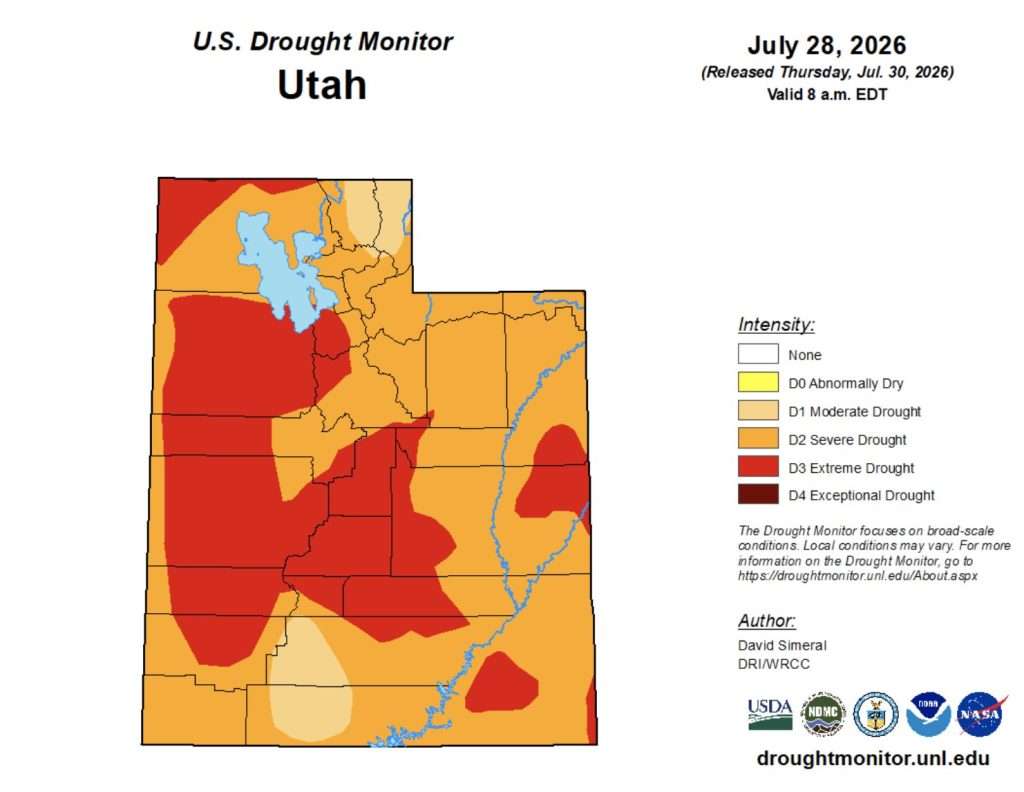
“While the rains have arrived, our reservoirs have seen a significant decline” Laura Haskell, drought coordinator for the Utah Division of Water Resources said, “The median drop between May and July is typically 1%, but this year it reached 13%. This is due to the low snowpack resulting in low runoff.”
Safety Around Burn Scars
Burn scars remain highly unstable for years, significantly increasing the risk of flash flooding and debris flows, even during relatively small storms. As monsoon activity continues, the threat of flooding remains elevated in these areas. We strongly encourage all residents to stay informed by monitoring local weather forecasts, avoiding burn scar areas during rain events and strictly following the guidance of local emergency officials. If you are in or near an affected area, heed all evacuation orders and never attempt to travel through flooded roadways or drainages. Moving water can be deadly and flooding can occur with little warning. Visit the Division of Emergency Management’s website for tips on how to stay safe around hazards in Utah.
Wildfire Activity
Fire activity has increased across Utah this year, with 690 wildfires reported, including 364 human-caused fires. While containment continues to improve on Utah’s largest wildfires, recent lightning associated with the summer monsoon pattern has resulted in an increase in lightning-caused fire starts. Although higher humidity and scattered precipitation have moderated fire danger in some areas, conditions remain dry in others. Utahns are encouraged to continue practicing Fire Sense by preventing human-caused ignitions, staying aware of local fire conditions, and reporting any new wildfire immediately.
Reservoirs, lakes and streams
- Instead of rising until late June or July, reservoirs started to drop in early May. The median drop between May and July is typically 1%. This year, the drop was 13%. Reservoir storage averages 57% full, which is 17% lower than the normal for this time of year, and 22% lower than this time last year.
- The boat ramp at Escalante Petrified Forest State Park is currently closed. When reservoirs reach low levels, some parks are forced to close their boat launch ramps in order to help better protect visitors and their property. Visit the Division of State Parks boat ramp conditions webpage for more information.
- Because Harmful Algal Blooms (HABs) may be happening earlier than normal, residents are urged to learn how to identify them and find current water advisories at HABs.utah.gov
- Due to current low water levels from construction projects and ongoing drought impacts, the Utah Division of Wildlife Resources issued emergency changes to increase the daily fishing limits at seven waterbodies in Utah. For more information about drought impacts on fish and fishing in Utah, visit the DWR website.
River Conditions Continue to Vary Across Utah as Irrigation Season Progressess
As Utah moves through the peak of the irrigation season, streamflows continue to decline across much of the state following an early runoff and below-average snowpack.
Conditions continue to vary by basin. Some river systems have benefited from stronger snowpack, reservoir releases, and recent summer storms, while others remain comparable to the drought conditions experienced in 2021. Water commissioners continue to regulate junior water rights where necessary to ensure senior water rights receive their lawful allocation.
Key observations from around the state include:
- Bear River – Conditions remain significantly stronger than many other basins and closely resemble the above-average 2019 water year. Improved snowpack, summer thunderstorms, and reservoir releases have helped maintain natural flows and support water deliveries.
- Upper Provo River – Streamflows continue to reflect drought conditions overall, though recent monsoon activity temporarily increased river flows. Those increases are expected to be short-lived as runoff continues to decline.
- Upper Duchesne River – Conditions remain similar to the 2021 drought, with reduced natural flows and priority regulation limiting water deliveries. Flows have steadily declined following the accelerated spring runoff.
- Upper Sevier River – Natural flows remain below average but continue to exceed 2021 drought conditions. Reservoir releases are helping supplement river flows and improve deliveries compared to the severe shortages experienced during the 2021 irrigation season.
The Division of Water Rights and water commissioners monitor streamflows, administer water rights, and work closely with water users throughout the irrigation season. River conditions will evolve as summer progresses, with streamflows influenced by remaining reservoir operations, localized precipitation, and ongoing irrigation demand.